When visiting the Costa del Sol in sunny Spain, there's a magical place just waiting for you, just a short drive from Marbella and on top of a mountain.
OK, the drive up to Ronda can be a tad daunting as it winds around the hillside, but the views on the way (for passengers at least!) are astounding. And what you will find at the top makes the whole thing worthwhile.
Ronda, whilst traditionally Spanish, incorporates a lot of history - from the Romans to the Moors, they have all left their mark in the well preserved ruins and buildings to be found in the town.
Pictured on the left is the "New Bridge", which spans a deep gorge, El Tajo. While it was built some years ago, the name New Bridge has somehow stuck.
When crossing the bridge the view down to the bottom of the gorge is astounding and on either side of the gorge, houses seem to just cling to the edges and look likely to fall at any moment... read full article.
When visiting the Costa del Sol in sunny Spain, there's a magical place just waiting for you, just a short drive from Marbella and on top of a mountain.
OK, the drive up to Ronda can be a tad daunting as it winds around the hillside, but the views on the way (for passengers at least!) are astounding. And what you will find at the top makes the whole thing worthwhile.Ronda, whilst traditionally Spanish, incorporates a lot of history - from the Romans to the Moors, they have all left their mark in the well preserved ruins and buildings to be found in the town.Pictured on the left is the "New Bridge", which spans a deep gorge, El Tajo. While it was built some years ago, the name New Bridge has somehow stuck.When crossing the bridge the view down to the bottom of the gorge is astounding and on either side of the gorge, houses seem to just cling to the edges and look likely to fall at any moment... read full article.
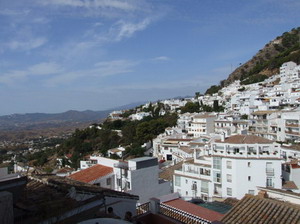
Mijas Pueblo is a traditional white village (or pueblo blanco) located in Andalucia in Southern Spain. The town nestles on the hillside with beautiful mountain and sea views.
Mijas Pueblo is part of the Mijas Municipality, which includes Mijas Costa (the coastal beach town), Mijas Golf (golfers' paradise) and Mijas Las Lagunas, an inland town close to the coast and Fuengirola.The pueblo is the original town of Mijas and is among the many beautiful white villages in the area. Perched high on the mountainside it offers spectacular views to the Mediterranean below and a scenic backdrop of mountains and endless pine forests. On entering the village, it is possible to see the ancient spring, which still provides natural mineral water... read full article.
Spanish artists can now regularly be seen walking on the streets and beaches displaying their art. Why wait in a gallery for people to come and see your work, when you can take it to the people? No more walls!
Walking Gallery is run under the direction of Spanish artist José Puig, and presents another brand new route through the city of Barcelona, with a great number of participating artists displaying high quality work.Other cities are also getting into the action, including Madrid, Bilbao, San Sebastian, Zaragoza and Vigo in Spain, and also Buenos Aires in Argentina.Their mantra? "NO MORE WALLS!"
Perched on the rocky coastline, east of Málaga city, is the "The Jewel of the Costa del Sol", a small town called Nerja.
When visiting the Costa del Sol, it is definitely worth travelling around 40 minutes by car from Málaga to visit this charming town. You can also catch a bus from the centre of Málaga.Surrounded by the Sierra de Almijara mountains, with magnificent views over the sea, the town truly is "The Jewel of the Costa del Sol".The following is a brief introduction to the major sights of Nerja....
The birthplace of Picasso and Banderas is a great mixture of ancient and modern.
While most people just fly in and out of Málaga on their Costa del Sol holiday, the city has its own unique charms and history.
A lot of people probably know that Pablo Diego José Francisco de Paula Juan Nepomuceno María de los Remedios Cipriano de la Santísima Trinidad Ruiz y Picasso was born in Málaga, Spain.
What's that? Too long for you? OK, just plain old Pablo Picasso.The famous Spanish painter, sculptor, printmaker, ceramicist, and stage designer was born in the house to the left on October 25, 1881 and passed away on April 8, 1973But did you know that the famous Spanish actor, José Antonio Domínguez Banderas, was also born there?
Known more commonly as Antonio Banderas, he still "treads the boards" in Málaga from time to time and supports the local theater community.While you won't find any buildings dedicated to Banderas in Málaga, you can visit the birthplace of Picasso and also a museum displaying both his and other famous Spanish art.
While the teeming hordes flock to Fuengirola, Marbella and Torremolinos in the summer months, Spanish tourists prefer a much quieter place.
Estepona, a typical Spanish seaside town nests on the coast, along the highway between popular, trendy Marbella and the famous Rock of Gibraltar.A little off the tourist-beaten track, and nowhere near the Fuengirola-Málaga Renfe circular rail service, the town enjoys a quieter experience in the summer months. Air-conditioned buses do run to the town, so it is accessible to tourists, but many can't be bothered to make the trek.However, the Spanish make their way down from the extreme summer heat of Sevilla or Cordoba to thoroughly enjoy their summer holidays in the pretty town.
Tens of thousands of Spaniards are taking to the streets yet again, this time against the labour laws in the country. A general strike was called for March 29, 2012.
Seen as the first test for the new prime minister, Mariano Rajoy, who has been in power for 3 months, strikers and protesters are demanding changes to the labour laws of the country. They are against the labour reforms that have been implemented in Spain.On 29 March 2012 , they have taken to the streets countrywide....
While the mainstream media quotes fairly low numbers and mainly emphasizes the violence by protests, here is adifferent stance on strikes in Spain, Portugal and other European countries. Opinions are given on the reasons for the strikes, and the effects of draconian austerity measures and unemployment.
In Portugal and Spain, workers are facing massive unemployment. Their labor and social rights are gradually being reduced, salaries are dropping and social benefits are being taken away from them....
A Spanish town suffering from massive unemployment is taking extreme measures to keep the town going. They are farming marijuana.
The town of Rasquera nestles in the foothills of the Serra de Cardo in Catalunya, Spain. A beautiful place with wonderful scenery surrounding it, the town looks like the ideal place to live.However, in Europe's current economic crisis, the town is dying. Massive unemployment affects the inhabitants, and they have now taken measures to stem this by farming marijuana.
On October 15th citizens around the world will take to the streets to express outrage at how our rights are being undermined by the alliance between politicians and big corporations. From Democracia real Ya (Real Democracy Now) we invite you to participate in this peaceful protest by joining our call to action or by calling for other actions on this date. It is time to raise our voice. Our future is at stake, and nothing can hold back the power of millions of people when they unite for a common goal.
Democracia real Ya is a platform that originated in Spain to coordinate various civil mobilization groups. Under the slogan “We are not goods in the hands of politicians and bankers”, thousands of people took to the streets on May 15th to demand a more participatory democracy, to reject corruption in Spain’s political system, and to show our opposition to the austerity measures imposed on us. Following the success of that first demonstration, several movements emerged. Acampadas (tent cities) were set up in central squares across the country, much like the first occupation of Tahrir Square in Cairo. The acampadas gave rise to popular assemblies, where citizens shape their goals through an inclusive non-hierarchal decision making process. The May 15 movement soon expanded beyond Spanish borders and inspired actions in numerous cities around the world, including a mass demonstration against the Euro Pact last June 19th.
Pressured by financial powers, our political leaders work for the benefit of just a few, regardless of the social, human or environmental cost this may cause. By promoting wars for profit and impoverishing whole populations, our ruling classes are depriving us of our right to a free and just society.
That’s why we invite you to join this peaceful fight and spread the message that together we have the ability to change this intolerable situation. Let’s take to the streets on October 15th. It’s time for them to listen to us. United we will make our voices heard! Join the cause!
On the 23 December 2010 in Cabinet, The Secretariat of Climate Change of the Ministry of Environment in Spain, gave approval for Repsol to prospect for natural gas and hydrocarbons in Malaga. This was approved and licenses were authorised to five companies to partake of a hydrocarbon investigation in the territory and on the Spanish coast. Among the companies who are authorised are CNWL Oil Spain, of the Canadian international Sherrit Corporation, and Shuepbach Energy/Vancast Exploration. These licenses authorise the mentioned companies to look for petroleum or gas in six areas of the Andalusian coast, denominated "Chinook - A, B, C and D" and "Tesorillo and Ruedalabola". These new licenses to explore the hydrocarbon potential on the Andalusian coast between Cadiz and Almeria are to look for active gas wells. Also other projects of investigation in search of hydrocarbons. ... read more by clicking below.... and please sign the petition... http://www.thepetitionsite.com/1/save-the-malaga-coast-spain/
Hemmed in by the Mediterranean to the South and by the backdrop of the mountains to the North, Marbella is the centre of international tourism on the Costa del Sol. Its magnificent climate, superb beaches, wealth of leisure facilities and hundreds of thousands of annual visitors have transformed this fishing port into a summer playground.
The seemingly endless mass of apartment blocks line the seafront, while more luxurious holiday complexes, with their impressive chalets, mansions and even palaces, extend inland. The city has developed a reputation as the most exclusive resort along the Costa del Sol, attracting famous visitors from the World of show business, adding a further glamorous dimension to this jet-setting resort.
Despite its modern opulence, Marbella has still preserved its old quarter of whitewashed houses, their facades adorned with typical wrought-iron grilles and breathtaking displays of flowers. The town has become a shopper’s paradise, particularly for luxury goods and over the years has developed a reputation for its health clubs and spas. Mention should be made of Marbella’s fantastic sporting facilities, particularly its golf courses.
To further emphasize the cosmopolitan nature of this modern resort, Marbella has two mosques, a synagogue and a number of protestant churches.
It is of little surprise that Marbella is consistently one of the most sought after tourist destinations on the Costa del Sol. For the best selection of Holiday rentals in Marbella and to rent a beach villa in Spain be sure to check out Spain Holiday’s extensive list of property rentals – all directly from the owners themselves.
A few days prior to the recent local elections in Spain, a group of people got together in the main plaza in Madrid to protest government and banking policies.
The movement has now spread to all major cities in the country and continues even today. Other countries in Europe have been inspired to follow Spain's lead or to lend their support.
If you are planning to visit the major cities of Spain, do not be afraid - these protests are entirely peaceful and you can only be moved by this experience.
You will see little, or nothing of this movement in the mass media - search on youtube.com for #spanishrevolution, Spanish Revolution or Democracia Real Ya! for more information.
The following is a video of the protests prior to election day, and below you can read the Manifesto in both English and Spanish:
Manifesto (English)
We are ordinary people. We are like you: people, who get up every morning to study, work or find a job, people who have family and friends. People, who work hard every day to provide a better future for those around us.
Some of us consider ourselves progressive, others conservative. Some of us are believers, some not. Some of us have clearly defined ideologies, others are apolitical, but we are all concerned and angry about the political, economic, and social outlook which we see around us: corruption among politicians, businessmen, bankers, leaving us helpless, without a voice. This situation has become normal, a daily suffering, without hope. But if we join forces, we can change it. It’s time to change things, time to build a better society together. Therefore, we strongly argue that:
The priorities of any advanced society must be equality, progress, solidarity, freedom of culture, sustainability and development, welfare and people’s happiness.
These are inalienable truths that we should abide by in our society: the right to housing, employment, culture, health, education, political participation, free personal development, and consumer rights for a healthy and happy life.
The current status of our government and economic system does not take care of these rights, and in many ways is an obstacle to human progress.
Democracy belongs to the people (demos = people, krátos = government) which means that government is made of every one of us. However, in Spain most of the political class does not even listen to us. Politicians should be bringing our voice to the institutions, facilitating the political participation of citizens through direct channels that provide the greatest benefit to the wider society, not to get rich and prosper at our expense, attending only to the dictatorship of major economic powers and holding them in power through a bipartidism headed by the immovable acronym PP & PSOE.
Lust for power and its accumulation in only a few; create inequality, tension and injustice, which leads to violence, which we reject. The obsolete and unnatural economic model fuels the social machinery in a growing spiral that consumes itself by enriching a few and sends into poverty the rest. Until the collapse.
The will and purpose of the current system is the accumulation of money, not regarding efficiency and the welfare of society. Wasting resources, destroying the planet, creating unemployment and unhappy consumers.
Citizens are the gears of a machine designed to enrich a minority which does not regard our needs. We are anonymous, but without us none of this would exist, because we move the world.
If as a society we learn to not trust our future to an abstract economy, which never returns benefits for the most, we can eliminate the abuse that we are all suffering.
We need an ethical revolution. Instead of placing money above human beings, we shall put it back to our service. We are people, not products. I am not a product of what I buy, why I buy and who I buy from.
For all of the above, I am outraged. I think I can change it. I think I can help. I know that together we can.
----
MANIFIESTO “DEMOCRACIA REAL YA”:
Somos personas normales y corrientes. Somos como tú: gente que se levanta por las mañanas para estudiar, para trabajar o para buscar trabajo, gente que tiene familia y amigos. Gente que trabaja duro todos los días para vivir y dar un futuro mejor a los que nos rodean.
Unos nos consideramos más progresistas, otros más conservadores. Unos creyentes, otros no. Unos tenemos ideologías bien definidas, otros nos consideramos apolíticos… Pero todos estamos preocupados e indignados por el panorama político, económico y social que vemos a nuestro alrededor. Por la corrupción de los políticos, empresarios, banqueros… Por la indefensión del ciudadano de a pie.
Esta situación nos hace daño a todos diariamente. Pero si todos nos unimos, podemos cambiarla. Es hora de ponerse en movimiento, hora de construir entre todos una sociedad mejor.
Por ello sostenemos firmemente lo siguiente:
Las prioridades de toda sociedad avanzada han de ser la igualdad, el progreso, la solidaridad, el libre acceso a la cultura, la sostenibilidad ecológica y el desarrollo, el bienestar y la felicidad de las personas.
Existen unos derechos básicos que deberían estar cubiertos en estas sociedades: derecho a la vivienda, al trabajo, a la cultura, a la salud, a la educación, a la participación política, al libre desarrollo personal, y derecho al consumo de los bienes necesarios para una vida sana y feliz.
El actual funcionamiento de nuestro sistema económico y gubernamental no atiende a estas prioridades y es un obstáculo para el progreso de la humanidad.
La democracia parte del pueblo (demos=pueblo; cracia=gobierno) así que el gobierno debe ser del pueblo. Sin embargo, en este país la mayor parte de la clase política ni siquiera nos escucha. Sus funciones deberían ser la de llevar nuestra voz a las instituciones, facilitando la participación política ciudadana mediante cauces directos y procurando el mayor beneficio para el grueso de la sociedad, no la de enriquecerse y medrar a nuestra costa, atendiendo tan sólo a los dictados de los grandes poderes económicos y aferrándose al poder a través de una dictadura partitocrática encabezada por las inamovibles siglas del PPSOE.
El ansia y acumulación de poder en unos pocos genera desigualdad, crispación e injusticia, lo cual conduce a la violencia, que rechazamos. El obsoleto y antinatural modelo económico vigente bloquea la maquinaria social en una espiral que se consume a sí misma enriqueciendo a unos pocos y sumiendo en la pobreza y la escasez al resto. Hasta el colapso.
La voluntad y fin del sistema es la acumulación de dinero, primándola por encima de la eficacia y el bienestar de la sociedad. Despilfarrando recursos, destruyendo el planeta, generando desempleo y consumidores infelices.
Los ciudadanos formamos parte del engranaje de una máquina destinada a enriquecer a una minoría que no sabe ni de nuestras necesidades. Somos anónimos, pero sin nosotros nada de esto existiría, pues nosotros movemos el mundo.
Si como sociedad aprendemos a no fiar nuestro futuro a una abstracta rentabilidad económica que nunca redunda en beneficio de la mayoría, podremos eliminar los abusos y carencias que todos sufrimos.
Es necesaria una Revolución Ética. Hemos puesto el dinero por encima del Ser Humano y tenemos que ponerlo a nuestro servicio. Somos personas, no productos del mercado. No soy sólo lo que compro, por qué lo compro y a quién se lo compro.
Por todo lo anterior, estoy indignado. Creo que puedo cambiarlo. Creo que puedo ayudar. Sé que unidos podemos. Sal con nosotros. Es tu derecho.
Bioparc Fuengirola (previously known as Fuengirola Zoo) offers a little extra during the summer months.In July and August each year, the zoo is open until midnight, giving people a chance to walk through the leafy and authentic environments and view the animals in the cooler time of the day.They also offer an animal exhibition in the "forest clearing", which involves various animals from the zoo strolling into the exhibition area - they have been well trained to come out and look for the treats left for them by their carers.
We were privileged to see a porcupine, a couple of bush pigs, a tiny little anteater, a sloth, a civet cat and other animals enjoying their evening treat. All accompanied by an owl and a hawk, swooping between two handlers, over the heads of the guests! Totally fascinating and so very well done.
The exhibition ends with dancing and drumming by a troupe of Senegalese performers - really entertaining and also gave the very real feel of being in the African bush (which, having lived in Africa most of my life, I totally enjoyed of course!).
Please enjoy a video of the performance below...
For more information about Fuengirola and a range of photo galleries, visit All Spain Accommodation.
Mijas is located in the Spanish province of Malaga on the Costa del Sol in Andalucia. The town consists of two separate areas - Mijas Pueblo - a traditional Spanish white village - and Mijas Costa - a modern coastal beach resort. Mijas Costa is typical of all the Costa del Sol beach resorts with restaurants and bars near the beach.
Mijas Pueblo is a typical Andaluz village of whitewashed buildings, with winding narrow streets, and the proverbial geranium strewn balconies, perched high on the mountainside with spectacular views to the Mediterranean below and a scenic backdrop of mountains and endless pine forests. On entering the village, it is possible to see the ancient spring, which provides natural mineral water. Stroll the narrow, cobbled streets and breathe in the atmosphere - stop for a coffee or a glass of wine along the way and sit and watch the world go by.. then take a trip around the village in the famous donkey-drawn taxis of Mijas.
The village is a fascinating place to visit. Many bars and restaurants, attractive shops, and astounding views all around, plus the following attractions:
Hermitage of the Virgen de la Peña
Visit the Hermitage of the Virgen de la Peña, which dates back to 1520. Built by Mercedarian monks, the inside of the hermitage is decorated with the image of the patron saint that gave this place its name. Legends tell that the Virgen de la Peña appeared right on this spot, in front of two shepherds which is why the heritage was built here and not elsewhere.
Botanical Gardens and La Muralla
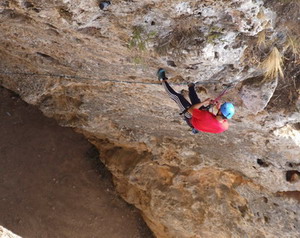
Just below the heritage is a large and attractive botanical garden (plants are labelled with their names for information). The gardens are integrated with the old defensive walls of the town (la Muralla). There is also a rock gorge within the gardens, which makes an interesting rock climbing location for climbers to practice their skills, and lovely waterfalls and fish ponds.
Other attractions in Mijas Pueblo are as follows:
Casa Museo
The Casa Museo is a fully restored museum displaying old farming tools and equipment. Located on the Plaza de la Libertad, the museum has a typical Andalusian style patio, and on the top floor a range of sculptures, paintings and traditional crafts can be viewed.
Plaza de Toros
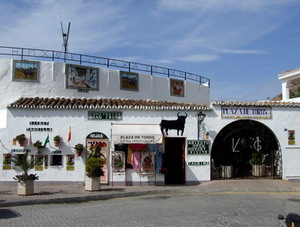
In the same area as La Muralla is the Plaza de Toros, or bull fighting ring. Built in the traditional manner in 1900 the bull ring though small offers exciting bullfights on a regular basis. The views from the seating area in the bull ring are astounding. Close by you can visit the Siete Caños square, the Casa de la Cultura and other other nearby points of interest.
Carromato de Max
The Carromato de Max is a fascinating and special museum, located only a few metres from the main square and the town hall of Mijas Pueblo. It is a museum of miniatures which includes fascinating objects such as a picture of Abraham Lincoln painted on a pin-head or a prayer written on the borders of a visiting card.
The entire Mijas area is a golfer's paradise with year-round sun and numerous championship golf courses within easy reach. Just inland from Mijas Costa you'll find La Cala North and South golf courses and the David Leadbetter Golf Academy. Also within easy driving distance are the famous courses of Valderrama, Torrequebrada, Alhaurin La Grande and Monte Mayor.
Well worth a visit on your trip to Spain - make a note to visit Mijas.
Most tourists think of Malaga as a place to fly into to start their holidays on the Costa del Sol, but few actually take the time to explore this fascinating city.
The city is the birthplace of Pablo Picasso, and is a cosmopolitan and attractive city – ranging from modern streets and buildings, to the older narrow winding streets of typical Andalucian buildings, with many seafood restaurants and tapas bar to relax and rejuvenate during your tour of the city.
Located on the Costa del Sol, Malaga is situated in a sweeping bay, with golden sandy beaches, and is surrounded by beautiful mountainous scenery. Visit the port to see many cruise ships visiting the city. The city enjoys over 300 days of sunshine each year and benefits from the highest average temperatures in Spain.
Malaga has many attractions for the tourist and here is a selection of the main tourist “must visits”:
Calle Larios:
A wide and modern boulevard through the centre of the city with many smart shops and coffee bars and well worth a stroll. You will see many human statues (or street performers) – reminiscent of the famous Las Ramblas in Barcelona.
From Calle Larios, you can take many of the smaller, narrow winding streets and plazas to view other attractions of the city.
The Cathedral of Malaga:
A beautiful Renaissance cathedral with a Baroque and beautiful façade – and well worth the visit to this gorgeous piece of architecture. However, beware of the gypsies haunting the entrance to the cathedral, who will try their best to take a few Euros from you.
Birthplace of Picasso:
Close to the Cathedral is the Plaza de la Merced – a huge square surrounded by restaurants and bars, and including the house in which Pablo Picasso was born. Not much to see in the house, but it is interesting to see photos of Picasso as a child, and the clothing he wore when he was christened. No cameras are allowed in the house – if they catch you they actually take your camera and lock it in a locker until you are ready to leave! (I speak from experience!).
Picasso Museum:
More interesting is the Museo Picasso – which displays many of the fine works of this famous artist – close to the Cathedral.
La Alcazaba
Further on you can visit La Alcazaba – built during the Moors occupation of Malaga in the mid fifteenth century. Fascinating architecture and definitely worth a visit. The Alcazaba is on the hillside, and you can get some wonderful views from up there. An interesting note is that there is a well preserved Roman amphitheatre in the grounds of La Alcazaba – unfortunately as it is undergoing renovation, it is only possible to view the ruins through the fence.
Gibralfaro Castle
At the very top of La Alcazaba is the Moorish Castillo Gibralfaro – with astounding views of the city below and the surrounding areas. Right next door to the castle is the Parador de Malaga Gibralfaro, one of the famous Paradores of Spain, which also enjoys the wonderful views. Well worth a stay for at least a night.
Calle Alameda and the Botanical Gardens
Running through the centre of the city, and close to La Alcazaba are the beautiful botanical gardens – a lovely and leafy place to relax and catch your breath (also just adjacent to the Port of Malaga).
Teatro Cervantes
The main theatre in Malaga is the Teatro Cervantes, which is where another famous son of Malaga once performed – Antonio Banderas – and he still appears there from time to time.
Malaga has many excellent restaurants, cafes and tapas bars where you can enjoy a variety of local dishes, ranging from tapas to full menus. Most are very affordable and offer Andalucian specialities including “pescaito frito”, a selection of small fried fish including sardines and red mullet. Enjoy the catch of the day and wash it down with a fine Spanish wine.
As Malaga goes to sleep during the siesta period, this would be the perfect time to relax and refuel for the late afternoon activities.
Incidentally, if seeing Malaga with limited time, the Hop-On Hop-Off bus tour is a great option as it takes you to all the main sights of the city in comfort... get on and off as often as you like during the day.
In closing, Malaga is definitely worth at least a day and a night of your visit to the Costa del Sol. Tag it on to the beginning or ending of your holiday and you will not regret it!
When visiting the Costa del Sol in Andalucia, Southern Spain, a must-see destination is the Zoo in Fuengirola
Located right in the centre of town, the zoo is a beautiful and calm place, beautifully designed to give its residents space and realistic natural habitats to live in, grow and produce their young.
History of the Zoo
The zoo originally opened in the 1970's, as a typical zoo, with awful cages and fenced enclosures for the animals. Living conditions were unspeakable and left a lot to be desired. In December 1998, Rain Forest took over the contract to operate the zoo and completely redesigned the property using the latest “full immersion zoo” concept. The property is actually relatively small, so they chose to use a “tropical forest” ecosystem for the whole of the property- very suitable with the sub-tropical vegetation in the area.
They set out to create an environment embracing the tropical rainforests of Madagascar, Southeast Asia and Equatorial Africa, including rivers and waterfalls, caves, valleys, trees and rocks. As the property is small, subterranean stables were built for the animals to sleep and also raised gardens were erected around the property to block off the nearby buildings - making the zoo a different world within the busy seaside city.
Breeding of endangered species
Once everything was in place, the animals were introduced to their wonderful new habitat. Breeding of endangered species now successfully occurred - particularly with the chimpanzees.. Although the zoo had been breeding chimps from the outset, in the past there was a great deal of infanticide, as conditions were so unnatural. For the first time they could walk on grass, touch plants, run, play hide-and-seek… for the first time they could behave like chimpanzees.
With the introduction of the new zoo, many of the animals are now successfully breeding - not only the chimps, but also the Bornean Orang-utans, the Sumatran Tigers, the lemurs from Madagascar, Pygmy Hippopotamus and the Blue Duiker are all examples of animals that now successfully breed their young in this new environment.
It is truly wonderful to see the baby animals, and their parents so happy and proud. Although I am normally against zoos as a whole, seeing endangered species flourishing is truly a heart warming experience.
A stroll around the zoo
As you enter the zoo, staff will take your photo, as a memento of your visit. You will then calmly stroll around the shady environment, with tropical sounds appropriate to each section playing through the trees. It is easy to imagine that you are actually in the tropical jungles of Africa or Asia!
There are aviaries of beautiful birds, waterholes with various buck and birds including beautiful flamingos and their young, sharing the space, and of course the more famous animals in the zoo - the Gorilla, the Sumatran Tigers and leopards! Also worth a visit are the Orang-utans - they have recently produced a cute youngster, and the mother endlessly shows off her baby to visitors, and also delights in posing for you - she definitely has a great sense of humour, and I have managed to take some amazing shots of her!
The chimps are also enchanting to watch, and currently have youngsters too. The golden cheeked gibbons are also beautiful - the male of the species being black and the female a beautiful golden colour. Currently their baby is also golden, but as it is a male, it will eventually turn black like Dad.
Make sure you visit the Nile crocodiles - scary looking creatures, but luckily the viewing glass is very thick!
The highlight of the visit, in my opinion, is the Madagascar enclosure - habitat of the lemurs, where every 30 minutes you can take a tour to visit these gorgeous and friendly creatures. Entrance to the enclosure is through a very realistic baobab tree - created for the zoo - you can really imagine that you are in Africa when you step inside this hollow tree on the way to the lemurs!
Another highlight is the regular Forest Clearing Exhibitions, where you can enjoy a commentary on various animals in the zoo, and see exhibits. In summer, during July and August, try and visit the zoo at night for an amazing experience as the animals come to life after sleeping in the heat of the day - concluding with a dinner in the heart of the jungle! Currently they are running a special African evening, with African dancing and a tasty meal.
In conclusion:
All in all, Fuengirola zoo is a zoo in continuous evolution and it is difficult to include everything about this wonderful place in one article. However, it is important to know that the zoo is involved in 35 European endangered species breeding programmes and also collaborates on a variety of international projects to save, in situ, the planet's endangered forest zones. Please give generously to the various projects as you visit the zoo and have a wonderful visit! You will be back (I've visited 4 times and I LIVE in Fuengirola!
About the Author:
Anne Sewell is involved in travel on the internet with several websites, including All World Vacation Station - a global travel guide with worldwide accommodation options.