Wednesday, April 24, 2013

Escape to a rural bed & breakfast in Spain this spring

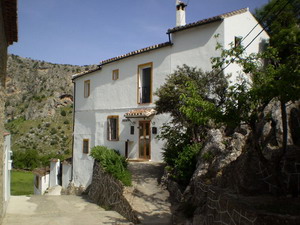
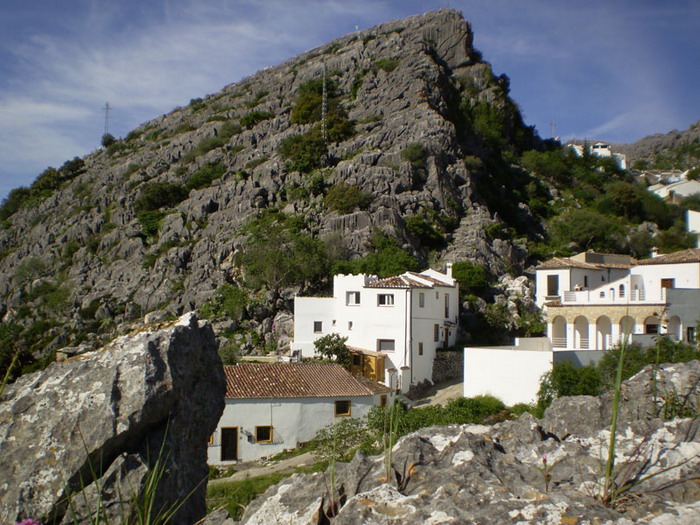
Holidays on the coast can often turn into a "been there, done that, got the t-shirt" kind of scenario. Yes, its great every now and then to visit the coastal resorts, but how about finding out more about the real-life Spain by venturing inland?

Just a few kilometers from said golden beaches are many quaint, unspoiled and beautiful villages, and surrounding these villages many treasures can to be found.
Here are a few featured examples of what is available, but there is, of course, so much more on offer for your Spanish vacation....

Read more at: http://www.digitaljournal.com/article/348708

Wednesday, April 17, 2013

Review: Mister Noodles — Oriental temptations on the Costa del Sol

What started as a small restaurant with a few tables is now about to grow into a group of tasty food venues on the Costa del Sol in southern Spain. 

The local Fuengirola branch of Mister Noodles opened some years ago, and has always been popular with both local residents and holidaymakers. 

This branch has since doubled in size, and further branches are soon to be opened in Riviera del Sol in Calahonda and also in Arroyo de la Miel, thus extending the range of this popular and delicious cuisine...  

Read the full article and see all that lovely food at: http://www.digitaljournal.com/article/348167

Sunday, April 07, 2013

Photo essay: Fuengirola, Spain — A springtime beachfront stroll

Spring officially sprang (or is that sprung?) around a month ago, but it was hard to know it. With endless rain, cold winds and chilly nights, it seemed to have gone forever. But now, it seems spring is officially back!


Read more and view photos at: http://www.digitaljournal.com/article/347445

Friday, March 29, 2013

Bioparc Fuengirola, Spain revisited (video)

After months of wintry weather, spring has arrived on the Costa del Sol in southern Spain. The spring weather tempted the writer to take a stroll to the Bioparc Fuengirola to catch up with the residents there.


As spring gradually creeps in, along with quite a few tourists, and with Semana Santa (Saint Week) holidays leading up to the Easter weekend, the writer decided to sneak out of the office today.


Bioparc Fuengirola is literally just around the corner, and it has been a while since the last visit to the former Fuengirola Zoo.
The first thing this writer noticed was that expansion work is going on with some of the animal enclosures, and it was quite strange to actually see the surrounding apartment blocks from within the Bioparc. 

These are normally hidden by walls and trees to keep the feeling of being in a jungle environment. Apparently the construction work will be concluded soon however.


Besides the work going on, the animals appear to be happy and healthy. A visit to the chimpanzees caused much amusement, as this fellow sat on a rock and blew "raspberries" at the surrounding audience, interspersed with huge toothy grins.

A visit to the orangutans from Borneo was surprising. Dad wasn't there. It seems the father orangutan has moved along to another Bioparc in the country, and a youngster has turned up in his place.

Mother and daughter are still doing fine, and it looks like the new addition is a young male. Possibly the Bioparc is thinking ahead to breeding with the young female who is a couple of years old now.


There was an addition of a rope climbing set up in the orangutans' enclosure, and as can be seen in the photo and video above, they were taking full advantage of it, swinging and climbing around.

These Northern Talapoin monkeys appeared to be a new addition, shown here with a baby Colobus monkey in the background:


The buff-cheeked gibbons were a little more outgoing - they have always been very shy, but last year had a baby, who is now an adult:


If you are planning a spring or early summer trip to southern Spain, Fuengirola and its lovely Bioparc are well worth the visit. However, if you prefer not to stay over in this seaside city, there are many lovely villages in the surrounding countryside where you could spend the night in a charming bed & breakfast.

Bear in mind that the weather will be pleasant for the next two to three months before the crazy summer heat sets in.

Read more and see more photos at: http://www.digitaljournal.com/article/346037

Tuesday, March 19, 2013

Spring is the time to visit the south of Spain!

After what feels like an endless winter, spring is finally creeping up on us, with some gorgeous warm, sunny days on the way!


As we know, southern Spain can be incredibly hot in the summer months, especially July and August, so springtime is probably the very best time for a relaxing holiday in the warm sunshine.

Had enough of the coastal towns, crowded beaches and English pubs?  Maybe take a different route this spring and visit the more rural areas.  Sheer beauty, incredible views, and yet still within easy reach of the major attractions.

The hillsides are gradually covering with their spring plumage, making it a pleasure to drive along, visiting the many small villages inland from the Costa del Sol.

All Spain Rural Accommodation has recently added some wonderful new charming and rural bed & breakfast options in the countryside:


1.  In Axarquia - mountainous land of white villages, olive and almond trees and wonderful country views, lies Casa Colina, a beautifully renovated farmhouse, run by Paul and Niki.


A great place to stay if you are looking to explore the sites of Andalucia or just relax by the pool in beautiful surroundings.

Lunches and dinners are prepared daily from locally sourced produce, including fresh eggs from their 12 hens and home-reared chickens. All meats used at Casa Colina are free range and where possible organic.

Guests can choose from 4 individually styled suites, all of which have a drinks fridge and tea/coffee making facilities.  And just look at the view!


2.  Near the historic and fascinating mountaintop town of Ronda, we can find Montejaque, an intriguing and typical Andalucian village in the mountains, surrounded by wonderful views.


If you would love to visit Ronda, but prefer to stay somewhere a little quieter, the perfect bed & breakfast option is Casa el Corchito:


Located in the village of Montejaque, near Ronda, Andalucia, Spain, enjoy a relaxing stay in a friendly and smokefree environment. Clean, comfortable and affordable.

Casa El Corchito is located in the Andalucian mountains on the edge of Grazalema Natural Park, only 15 km from the historic town Ronda.

The surrounding area will attract you to experience a mixture of a relaxing, a sportive and cultural holiday.  You can enjoy a good climate, all year round, many interesting sites (historical, cultural and natural, easy travelling distance to the beaches and cities and many sports opportunities, including climbing cycling and walking, especially with 3 natural parks close by.

Of Dutch origin, the owners, Rob and Coby will ensure a pleasant stay and will assist with all your touring, walking, and watersports needs.


So consider southern Spain for a warm break in springtime.  You will not regret it!

Tuesday, March 12, 2013

Spain is officially healthiest country to live in Europe


Despite its economic problems, Spain is still the healthiest place to live in Europe, and possibly the world, according to the medical journal Lancet, with an average of 70.9 years of healthy living, and a life expectancy of 81.4 years.

The medical journal, Lancet, states that according to the European League Table, which is comprised of data collected over a 20 year period, the healthiest place to live in Europe is Spain, which also beats many other countries in the world.
The country ranks number one for life expectancy with an average of 81.4 years, which is two years longer than people living in the UK. Spaniards' years in good health are also higher at 70.9 compared to 68.6 years in Britain. In fact the UK is way down the list in 12th place, behind Greece, Ireland and Germany.
The BBC quotes Professor John Newton, chief knowledge officer of Public Health England, as saying, "Despite some enviable recent success, for example on smoking, we in the UK need to take a hard look at what can be done to help people in the UK achieve the levels of health already enjoyed by other some countries. Central and local government, charities, employers and retail businesses all have a part to play."
The US isn't doing too well either, and is listed at number 17, with on average 67.9 healthy years and a life expectancy of 78.2 years.
Lancet has attributed a combination of factors to Spain leading in the results, including healthy eating (with the Mediterranean diet), the warmer climate and more walking.
The Guardian also said that the fact that Spanish families still care for ailing relatives is probably a major factor, with relatives taking daily meals to those in hospital. They say that premature deaths from falls are also low.
The BBC lists the full table of countries in order of healthy years and life expectancy at the end of their article. However, taking the top six healthiest countries we can see:
1. Spain: average healthy years - 70.9; life expectancy - 81.4
2. Italy: average healthy years - 70.2; life expectancy - 81.5
3. Australia: average healthy years - 70.1; life expectancy - 81.5
4. Sweden: average healthy years - 69.6; life expectancy - 81.4
5. Canada: average healthy years - 69.6; life expectancy - 80.6
6. France: average healthy years - 69.5; life expectancy - 80.9


Read more: http://www.digitaljournal.com/article/345370

Monday, January 14, 2013

Málaga city, gateway to the Costa del Sol, southern Spain


Málaga is one of those cities that you fly into, and of course, out of, when arriving for a vacation and flying off home again.  However, the city is so much more than an airport!  Take the time to visit before setting off on your beach or rural Spanish holiday.


The second largest city in Andalucia, southern Spain has a lot to offer.  A cosmopolitan and attractive city, with its contrasts of ancient and modern, there is something for everyone to explore.

The city is the birth place of a couple of famous people including the artist Pablo Picasso and another son of Málaga, a certain Antonio Banderas, still "treads the boards" there from time to time.

In the newer section of the city, you will find modern department stores, like El Corte Inglés, and shopping malls full of temptations. 

You can stroll Calle Larios and view the best of fashion along the way, plus enjoy the human statues (street artists), reminiscent of Las Ramblas in Barcelona.


However, for many people, the older, narrow and winding streets are far more interesting, with little seafood restaurants and tapas bars dotted here and there, and fascinating little shops hiding just around the corner. 

If you follow Calle Larios you can find these fascinating little streets as side-shoots of the main "drag", sometimes even finding an artist at work.


In the older area, you will also find the Cathedral of Málaga - a beautiful Renaissance building with a baroque and very lovely façade. However, when visiting, beware of the gypsies haunting the entrance to the cathedral, who will try their best to take a few Euros from you.


The interior is fascinating with its curves and high ceilings.


Close by is the Plaza de la Merced, a huge town square surrounded by restaurants and bars and a great place to take a rest on your tour.  Here you will also find the house in which Pablo Picasso was born. Worth a visit, although there is a little to see except the clothing worn by Picasso when he was christened!  Also you are not allowed to take photos inside the house - if you try, your camera will be confiscated and locked away until you leave - I speak from experience and was surprised I didn't get my knuckles rapped too!


More interesting in the Museo Picasso (or Picasso Museum), where you can view many of the fine works of the artist as well as other famous artists:


Around the corner is La Alcazaba, a Moorish creation from the mid fifteenth century.  The architecture is fascinating and if you have a bit of energy, you can climb right to the top where the Gibralfaro Castle is located, with amazing views across the bay and countryside. 


A note of interest is that there is a well-preserved Roman amphitheatre in the grounds of La Alcazaba.  However, this is undergoing renovation at present and can only be seen through the fence.

Right next door to the castle is the amazing Parador de Málaga Gibralfaro, one of the famous Paradores of Spain - a range of luxury hotels, most of which are in converted castles, palaces and convents.  Luxury with great food, and amazing views!  The photo below was taken from the writer's balcony at the hotel, showing the bull ring and port.


Back down the hill, we find Calle Alameda and the Botanical Gardens, which run through the centre of the city.  A beautiful, restful and leafy place to relax and catch your breath.
Getting back to Antonio Banderas, if you enjoy theatre, Teatro Cervantes is worth a visit, and Antonio still appears there from time to time.


Wherever you go in the city, you will find a range of excellent restaurants, cafés and tapas bars.  Enjoy a range of both local and international food, but especially try the Andalucian specialities including “pescaito frito”, a selection of small fried fish including sardines and red mullet.  Enjoy the catch of the day and wash it down with a fine Spanish wine.

Lest we forget!  Yes, Málaga also has sandy and beautiful beaches to catch a tan, and you can also visit the Port of Málaga to see the incoming cruise ships and ferries from around the world.


If you don't have the time to stay in Málaga longer, try and make a plan to tag a day on to the beginning or end of your holiday to explore this fascinating city.  Jump into a horse-drawn carriage and enjoy the ride - you will not regret it!


Thursday, January 03, 2013

The Media Waves: 'Not to be published' photo of Princess Diana to g...

The Media Waves: 'Not to be published' photo of Princess Diana to g...: A photograph of Diana Spencer, relaxing with an unnamed young man just two days after the announcement of her engagement to Prince Charl...

Spain: Locksmiths in Pamplona boycott evictions

In 2012, more than 50,000 families were evicted from their homes in Spain for nonpayment of their rent or mortgage. Then the suicides began. Now locksmiths in Pamplona say, no more - they will not assist with evictions.

Evictions are becoming commonplace in crisis-torn Spain with so many people losing first their jobs, and then their homes.

When an eviction is made, the normal scheme of things is that locksmiths are employed to change the lock on the home, hand over the keys to the prosecutor, who then delivers them to the bank that is claiming the housing.

The locksmith is chosen on a random basis by the attorneys representing the financial institutions. 15 locksmith companies in the urban area of Pamplona have seen an increase from an eviction each month, up to an average of three per week.
However, now, according to Iker de Carlos, the Assembly Speaker of the Professional Locksmiths of Pamplona, in Spain's Navarre region, "they will have to call locksmiths outside Navarre."
De Carlos, who works in his family's locksmith business, said, "What you see on television is different from when you go there. You know you're helping to kick people out of their home, to stay on top of a perpetual debt that you will have to keep paying."
"We know that we will not start a revolution, but we want to serve as a example to Navarre society on how to fix an unfair situation," he added.
Referring to a suicide of an eviction victim, 53-year-old Amaia Egana, in autumn 2012 outside of Pamplona, de Carlos said, “We’re people, and as people we can’t continue carrying out evictions when people are killing themselves.”
The Union of Security Locksmiths has 300 member companies, with more than 2,000 professionals, who are now working against the evictions. Among the evictions they are boycotting, are situations where entire families, the elderly and children would be on the street once their home has been taken from them.
PRI reports that this is actually a very ingenuous plan, because if no one changes the locks on the apartment or house, the bank can’t repossess it, and the evictees can get back in. Apparently the legal proceedings to get them out again would take months, or even years.
The decision was taken three weeks ago at the first meeting of the Assembly of Professional Locksmiths of Pamplona. This was the only item on the agenda and it was approved unanimously.
The president of the federation, David Ormaechea said, "As professionals and people with a conscience, we cannot participate in these events."
Ormaechae went on to tell the experience of one of the locksmiths in the group, in Barcelona, who acted according to his conscience. The eviction involved a father with four children, one of whom is mentally ill. "It was a situation where he thought he should not act and he refused to change the locks." says Ormaechea.
Other evictions involved elderly people, struggling to get into their clothes as they are evicted, or a family crying on a bench outside what was once their home. There are also times when the locksmith's work goes beyond just changing the locks once the house has been vacated. On occasion, they are requested to open the doors, with the occupants still inside, to allow the eviction to take place.
According to de Carlos, most locksmith businesses in Pamplona are small and family-run, and they understand what is affecting the people around them. According to data provided by the Platform of People Affected by Mortgages in Navarre (PAHN), 2012 closed with over 700 evictions in the area. This means that in recent years, this type of work has become 10% of turnover for a locksmith.
While it is a fair percentage of their income, and is better paid than most jobs, the locksmiths have still made the decision to boycott the evictions. De Carlos says he is "curious to see how the banks react" to their decision. "Or will they have to call someone from outside Navarre," said one of the young locksmiths.
According to PAHN, with the public holidays over the festive season, there has been no opportunity as yet to test the reaction of banks. As it turns out there was an agreement between the banks to temporarily halt evictions during the holidays.
While Spain has passed a Royal decree to curb evictions in certain circumstances, this is not enough, and according to the locksmiths, the new decree does not help those that really need it, as the scheme would exclude retirees and single mothers with a child over 3 years old.
Guillermo Knob, another spokesman for the federation, reported that the step taken by the locksmiths in Navarre is "very noble" and he trusts that this will extend to the rest of Spain.
Read more: http://www.digitaljournal.com/article/340401


Monday, December 31, 2012

Spanish mothers strip for calendar to save school bus (video)


A new measure introduced in July cut funding for the school bus running in the Monserrat district of Valencia in eastern Spain. A group of mums got together and posed for an erotic calendar to raise money for their children's transport.

The problem is that, according to Spanish law, the government only has to provide transport if students live more than 3km away from the school. However, this new austerity measure states that the distance has to be calculated in a straight line, and this meant that "Evaristo Calayatud" school in the Monserrat District of Valencia was no longer eligible for a school bus.
However, as Silvia Lucas, one of the mothers, points out, “We have to scale a mountain and climb down a cliff to get to the school. On foot, using the most direct route it’s 4.5km, if you walk on the road it’s six."
Some of the parents are unemployed and have problems paying for petrol to drive the children to school themselves. For this reason, and to try and raise 43,000 euros, the group of mothers got together, disrobed and posed for the erotic calendar.

To make their point, the mothers struck various poses, including scaling cliffs and pushing prams along dirt tracks, which clearly illustrate the 6km walk their children were being forced to endure every morning. They figured that not only could their calendar raise the necessary money, it could at the same time “give the politicians a slap in the face.”
Mothers strip for an erotic calendar to raise money for their children s school bus.
It took just over a month after the launch of the calendar to raise enough money for the bus to run for three months for the 83 affected children.
There were difficulties along the way, when police ejected them from the town center for illegally selling the calendar. However, Silvia Lucas pointed out, “We were not selling them, we were collecting donations.”
She further said that while the calendar is not to everyone's taste in the neighborhood, there was little other choice.
“A lot of people tell us that we could have organized a community meal and not the calendar, but that would not have made nearly enough money. Our husbands are happy with the result and proud of our achievement” added Lucas, saying that she had done it for her children.

Read more and watch video: http://www.digitaljournal.com/article/340157

Sunday, December 30, 2012

Photo essay: A little bit of life in the countryside of Spain


Even in winter, the countryside in southern Spain has something to offer. Warm sunshine, wildflowers blooming and farmers working the fields.

I had to babysit my son's dogs, yet again, as he and his girlfriend took a short trip to the Gibraltar area.
As always, things were very quiet, and of course, the Internet was deadly slow.
As is always the best option, I had the camera with me and got a few views, starting in the dewy, early morning, and concluding at sunset....
Read more and see more photos: http://www.digitaljournal.com/article/340135

Sunday, December 23, 2012

A little bit of Christmas in Fuengirola, Spain - Photo essay.


While we bask in unseasonably warm sunshine, Fuengirola is getting ready for Christmas, with lights and decorations galore, and everyone is going shopping, shopping, shopping.

Just past the winter solstice, today is unbelievably warm. 21 degrees Celsius, with warm sunshine, clear blue skies and no wind at all. The tourists are in heaven, and we don't mind either!

In the run up to the Christmas festivities, the shops are busy and while people are probably buying less, and cheaper, business does seem to be booming. Supermarkets have many special offers going, which helps with preparations for the festivities.
One thing that is always noticeable at this time of year is that people smile a bit more readily, and greet you as you walk along. Even the normally grouchy ones, who will no doubt be back to normal once 2013 is here!
The Christmas lights here in Fuengirola, are, I think a bit boring this year. What happens is that the street lights, and the main Christmas tree in the plaza are shared with other surrounding pueblos, to keep them varied. This year, I think, Fuengirola pulled the short stick.
While some streets look colorful, for the most part it's a very monochromatic Christmas. Especially the main decor in front of the town hall, in the Plaza de España.
And sometimes reflections of the lights can be better than the real thing:
From different angles, with the lights on the olive trees in the plaza, it can make for an interesting view:
Just for fun and comparison, I am including views of previous Christmases, which I think were better. Especially when taken in the rain.
And in the early evening, with the children playing:
The side streets have some more colorful decor, with the Camino de Coin displaying poinsettias:
There were Christmas carols in the Plaza de España yesterday evening, and while the weekend will be relatively quiet, on Monday, Christmas Eve, the Spanish will be celebrating with their families and lots of good food and English and South African residents will be overeating on Christmas Day, as per usual.
And while those other than the Spanish will enjoy their gifts on the 25th, the Spanish children get to wait for January 6, when the Three Kings come to visit, with the festival of "Los Tres Reyes Magos."
The Plaza de la Constitución is always pretty - here is a view from a couple of years ago, with the church in the background, and an attractive deer in the foreground (which is lit at night).
Let's take this opportunity of wishing everyone, everywhere in the world a wonderful Festive Season, whether it's Christmas, Hanukkah, or other local festivities, from everyone here in Fuengirola, Spain.
And of course, a very happy and hopefully prosperous New Year in 2013:
Other photo essays on Fuengirola, Spain:
Photo Essay: 'PictoParque' — Art in the park in Fuengirola, Spain
Read more: http://www.digitaljournal.com/article/339626

Sunday, December 16, 2012

Art in the Park in Fuengirola Spain - PictoParque


The Councillor for Culture in Fuengirola, Rodrigo Romero, has come up with a great idea. Artists will be able to display their work and discuss art in the Parque de España every Sunday, at no charge.


Not only will artists display their work, the park will become a meeting place for artists and fans of the world of art. Discussions and exchanges of ideas will also take place. And also, not only is this great for local artists, they figure it also helps to make Fuengirola more interesting for tourists. 

For a rather nice change, there is absolutely no charge for the use of a section of the park to display your wares. The premiere of this cultural project was December 16.

Read more and see many more photos at: http://www.digitaljournal.com/article/339172

Friday, December 14, 2012

Ecce Homo 'restorer' auctioning her artwork for charity on eBay

Cecilia Giménez, the Spanish artist who was responsible for the unfortunate 'restoration' of the Ecce Homo fresco in a small town church in Spain, is now auctioning one of her own paintings on eBay for charity.

Digital Journal reported in August on the attempts by Giménez to restore the fresco of Christ in the small church in Borja, Spain. The fresco, 'Ecce Homo', depicting Christ, was originally painted by Elías García Martínez.
Possibly in an effort to make up for this, Giménez is selling her own oil painting "Las Bodegas de Borja" (Borja's Wine Cellar), pictured below, and so far, the bidding is doing well, and has reached 710 euros ($929), more than twice the starting price. The bidding apparently ends on Monday. The canvas is 33 x 22 centimeters and is dated 2000, signed by Giménez in the lower right corner.
Giménez added to the description on eBay that proceeds from the sale of the painting will be for the benefit of the Catholic charity organization Caritas.
Work by Cecilia Giménez   restorer  of Ecce Homo  on eBay
Cecilia Giménez
Work by Cecilia Giménez, "restorer" of Ecce Homo, on eBay
81-year-old Giménez became a media sensation in August after taking it upon herself to restore a fresco of Christ in a church in the northern Spanish agricultural town of Borja. She unfortunately ruined the original, as can be seen below.
 Ecce Homo  - botched restoration by Cecilia Giménez.
Centro de Estudios Borjanos
'Ecce Homo' - botched restoration by Cecilia Giménez.
However, her attempts soon became notorious worldwide, with entrepreneurs launching sales of souvenirs and t-shirts with the images of Giménez’s work. While the original name of the fresco is "Ecco Homo" (behold the man), Twitter users redubbed it "Ecce Mono" ("Behold the Monkey").
The fresco itself became a popular tourist attraction prompting the use of the picture on t-shirts, wine labels and souvenirs.
In September, Giménez's lawyers stated that she has no interest in a share of the tourism windfall her work has brought to her northeastern Spanish town.
Read more: http://www.digitaljournal.com/article/339031

Monday, December 10, 2012

Photo essay: Changing moods of the Mediterranean

Most people imagine the Mediterranean sea as a calm blue ocean and dream of warm, sunny beach holidays. But the Med is much more than a calm blue pond.


While in spring, summer and autumn, you can mostly count on relatively calm seas, warm temperatures and an endless stretch of sandy beach, winter brings some quite different moods to the Costa del Sol. In this article we are visiting Fuengirola, on the south coast of Spain, and exploring some changes which were made in the last couple of years to the fishing and leisure port in the seaside town...  Read more and see more photos

Tuesday, December 04, 2012

Photo essay: Gibraltar — Little England on the tip of Spain


Long an object of dispute between Spain and Great Britain, the British Overseas Territory of Gibraltar is a little enigma, tucked away at the very tip of Spain. It's a place where Spanish and English are intertwined...   Read more and view photos

Sunday, November 18, 2012

Monday, November 12, 2012

Review: Café Yanx — 'An American in Marbella', si...

The Media Waves: Review: Café Yanx — 'An American in Marbella', si...: Their website reads, "Here at Yanx, we like to think of ourselves as a smooth quality vintage with a successful pedigree going back some ...

Saturday, November 10, 2012